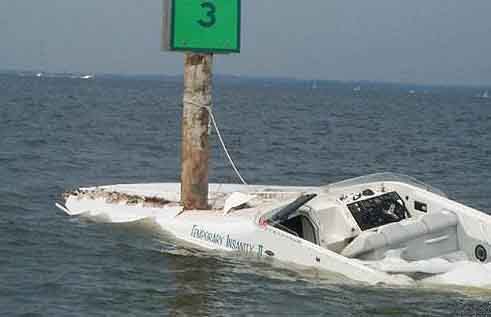
 As VA boat accident injury attorneys we know out area offer residents and visitors beautiful rivers, oceans, bays and lakes. These special amenities make riding personal watercraft (PWC) such as Jet Skis, Waverunners, waterbikes and waterscooters one of the most popular aquatic pastimes in those states. In fact, PWC ownership has ballooned over the past two decades. Unfortunately, the explosive growth of PWC use has led to more personal injuries and deaths due to accidents and collisions between the small crafts and boats.
Brand name PWCs — including Sea-Doos (Bombardier Recreational Products); Waverunners (Yamaha Motor Corporation, USA; and Jet Skis (Kawasaki Motors Corp,.USA) — are defined as motorboats less than 16 feet in length that are powered by jet pumps thatpeople stand, kneel or sit on. Those characteristics distinguish PWCs from other boats with engines because people normally sit inside boats and have propellers.
The U.S. Coast Guard (USCG) defines personal watercraft as Class A inboard boats, making the vehicle subject to the majority of rules and requirements other powerboats must follow.
While some PWC models can hit 60 mph or more, recent studies indicate that most owners do not race or make aggressive moves. When PWC accidents do occur, however, they can be severe. According to USCG figures, nearly one-quarter of all boating accidents are PWC-related. Almost half of those lead to injuries; some 75 percent of severe, collision-related PWC injuries occur with two or more PWCs; and deaths related to PWC accidents generally are from blunt trauma, such as a hit to the head, not from drowning.
All too often, alcohol plays a role in waterway accidents. Statistics released through the USCG to the Insurance Information Institute show that over the last decade, accidents related to alcohol use by recreational boat users accounted for 7.5 percent of all cumulative boating mishaps.
What Insurance Applies to PWC Accidents?
Recreational boating and PWC accidents are subject to many types of city, county and state laws. Motor vehicle rules are often applied to recreational boating and in the case of accidents or boating injuries, negligence and fault are determined in similar ways. Depending upon what body of water the injury occurs upon (e.g., navigable waterways), legal rights may differ considerably.
When it comes to PWCs, the majority aren’t covered by homeowners policies. Tony Alcala, marketing and operations manager for Sun Coast General Insurance Agency Inc., who has been writing PWC policies for years, notes that there can be confusion with customers regarding just what is and isn’t covered. “There’s about a 50 percent ratio of consumers that think their homeowners policy covers their PWC,” he commented from his Laguna Hills, California (CA), office. So any person operating a PWC should check with their insurance agent about proper coverage for their liability and actions on a PWC, and should consider a separate policy to cover the PWC. Virginia-based Boat U.S. Marine Insurance, which has offices across the United States, offers a PWC insurance program.
To learn more about plane, bus, light-rail and boat accidents and injuries, check out these other articles:
After an Airplane Accident Should I File My Injury Claim Against the Pilot or the Manufacturer of a Defective Part?
Light Rail in Norfolk Lacks Emergency Brake System
School Bus Accidents Are a Parent’s Nightmare
Although PWCs are involved in a disproportionate number of boating accidents that cause property damage and personal injuries, the craft have a better safety record when it comes to boating fatalities. The main reason for low fatality rates on PWCs is because all PWC operators, passengers and persons being towed by a PWC are required to wear USCG- approved life jackets, which the service calls personal flotation devices, or PFDs. Other boat operators and passengers only must have wearable life jackets aboard; they are not required to wear the PFDs.
Many accidents are caused by the PWC operator’s inexperience, inattention or failure to look out for hazards, swimmers or other boaters. Operators should take this responsibility by challenging themselves to learn as much as possible about their craft and staying alert during operation. They should continuously scan the water, especially to check the area behind their PWC before making any turns. Excessive speed causes or contributes to many accidents each year because manufacturers are making PWCs that reach speeds of 65-70 mph. Operators should keep their speed under control and not try to test the limit. Traveling at faster speeds amplifies everything, including tunnel vision, the potential for injury and less reaction time.
Recreational Boating and PWC Accidents
Needless to say, when serious injuries or deaths occur offshore as a result of collisions involving boats, ships, yachts or PWCs, you should immediately seek a qualified injury lawyer’s advice. A complicated web of overlapping local, state and federal laws may apply. Our law firm, Shapiro & Appleton, provides free initial legal consultation on these and any personal injury or wrongful death case.
Commercial Ships: Maritime Accidents Involving Negligence
Crew members on commercial ships often face unnecessary risks to their health and lives so that ship owners can earn the highest possible profits. Sailors injured due to dangerous or hazardous working conditions, crewing an unseaworthy vessels or negligence by an employer, vessel operator or crew member have rights to file injury claims under the Jones Act, which is officially known as Merchant Seaman Protection and Relief. Injured sailors with legitimate Jones Act claims are generally entitled to recover wages, future earnings, medical expenses and damages for pain and suffering and other general damages.
The Jones Act borrows provisions from the federal law applying to interstate railroad workers, and it dictates that the provisions also apply to sailors. Employers must also usually provide injured sailors with transportation home, wages while out, medical expenses, and, in cases of negligence, potentially damages for pain and suffering. However, careful legal analysis must be made as to the time deadlines for filing such claims, as well as whether state or federal workers’ compensation acts apply instead.
RELATED CONTENT