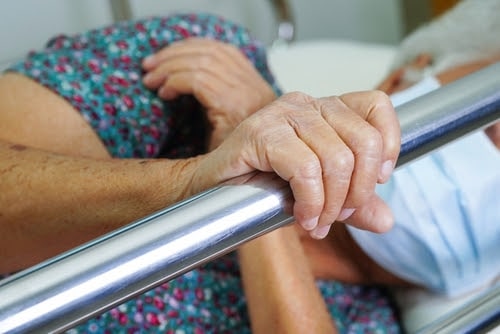
You trusted the nursing home to take care of your spouse, parent, or grandparent. Then you get the call that your loved one fell and suffered a serious injury. You’re likely to experience a whirlwind of emotions. You’re worried about your loved one’s condition and recovery, but you’re probably also feeling confused about how this could happen, and perhaps even betrayed by the facility that was supposed to keep your loved one safe.
When a fall results in broken bones, head injuries, or other serious complications, it’s important to understand what happened and whether negligence may have played a role. Our team at Shapiro, Washburn & Sharp has been advocating for families in situations like this for decades and has earned the prestigious “AV” preeminent rating from Martindale-Hubbell, one of the most prestigious and recognized lawyer rating services in the country.
Find out more about preventable types of falls below. Meanwhile, if you or a loved one suffered an injury while under the care of a nursing home and you have questions, contact us at 757-321-3983 for a free consultation with a Virginia Beach nursing home abuse lawyer.
How Common Are Nursing Home Falls?
Sadly, falls in nursing homes are not rare “freak accidents.” According to a Centers for Disease Control and Prevention (CDC) fact sheet on nursing homes, an average nursing home with 100 beds reports between 100 and 200 falls every year, and about 1,800 nursing home residents die each year from fall-related injuries.
Worse, according to a 2025 report from the U.S. Department of Health and Human Services, nursing homes failed to report 43 percent of falls with major injury and hospitalization among their Medicare-enrolled residents. Broader data shows that falls are the leading cause of injury for adults 65 and older in the U.S.
With numbers like this, nursing homes know very well that falls are a major risk to their residents. That means they must have systems in place to prevent them, especially for residents who are weak, confused, or unsteady.
What Causes Nursing Home Falls?
Every fall is different, but many serious nursing home falls trace back to the same types of failures. Here are six of the most common reasons falls occur, and when the nursing home may be legally responsible.
1. Unsafe or Cluttered Environment
Simple environmental hazards in a nursing home can be dangerous for frail residents:
- Wet floors without warning signs
- Poor lighting in hallways or bathrooms
- Clutter, cords, or equipment blocking walkways
- Loose rugs or uneven flooring
Nursing homes are supposed to inspect and fix hazards and keep walkways clear. If a resident trips over a cord in a dim hallway or slips in an unmarked puddle, that could be negligence, meaning the facility didn’t use reasonable care to keep the property safe.
Regular inspections should catch and correct hazards before anyone gets hurt. If a staff member knew or should have known about a hazard and didn’t do anything about it, and your loved one fell because of it, that is classic grounds for a liability or negligence claim.
2. Missing or Poor Fall-Risk Assessments
Every resident should receive a fall-risk assessment when they move into the facility and periodically afterward. This assessment identifies whether the resident needs special precautions such as non-slip footwear, a lowered bed, bed or chair alarms, a fall mat by the bed, extra supervision, or a walker.
If a nursing home skips this step or fails to perform it correctly, it may miss warning signs that a resident is likely to fall. Some facilities create a care plan but then fail to follow it. If your loved one was known to be a fall risk but then wasn’t given the protections they needed, the nursing home could be held liable for not taking proper steps to prevent a foreseeable injury.
3. Understaffing and Delayed Help
One of the most common reasons residents may fall in a nursing home is a lack of sufficient staff members. When too few aides are available, call bells may go unanswered, or residents may be left waiting for help for basic needs. Many elderly residents, feeling embarrassed or uncomfortable, may try to stand up on their own rather than wait. If they are unsteady, dizzy, or weak, this can easily lead to a fall.
Legally, nursing homes are required to staff adequately for the needs of their residents. When chronic understaffing leads directly to a fall because the resident could not get help in time, the facility’s negligence may be responsible.
4. Medication Errors or Over-Sedation
Medications can play a huge role in fall risk. Drugs like sedatives, blood pressure medications, and certain pain medications can cause dizziness, drowsiness, confusion, or impaired coordination. When a nursing home gives the wrong dose, changes a medication without monitoring side effects, or over-sedates a resident to make them easier to manage, the resident can become unsafe on their feet.
A fall under these circumstances might not be due to the resident’s age or health but instead to poor medication management. If the nursing home failed to recognize or respond to drug-related symptoms, it may be liable for the resulting injuries.
5. Improper Assistance with Transfers or Mobility
Nursing home residents often need help moving from a bed to a chair, standing up, walking, or using the bathroom. Care plans usually specify whether one or two staff members are required for these tasks, or whether equipment like a mechanical lift or a gait belt should be used.
If the staff members ignore these instructions, a fall may occur. Maybe a staff member attempts to transfer a resident alone when two people are required, or skips using a safety tool because they’re in a hurry. If the resident is left on the toilet or at the edge of the bed for too long without someone nearby, they may also fall and be hurt.
The nursing home must follow its own safety rules during a transfer or mobility task. If they fail, that can form the basis of a strong negligence claim.
6. Ignoring Early Warning Signs and Prior Falls
A nursing home is supposed to pay attention to its residents and notice patterns that may indicate the person is at risk of falling. If a resident has fallen before, for example, or if alarms have been going off frequently in their room, those are clear warning signs that the nursing home should be using extra precautions.
If staff members ignore these signs and fail to update the resident’s care plan, a serious fall becomes more likely. Some facilities have been known to even silence bed alarms because they find them annoying or disruptive. When a resident falls after a nursing home ignores repeated red flags, it’s often a sign that the safety plan was never adjusted to meet the resident’s changing needs—something the law requires these facilities to do.
Why Acting Quickly Matters
After a loved one falls and gets hurt in a nursing home, it’s important for family members to act quickly. Evidence can easily disappear after a fall. Video footage may be overwritten in days or weeks, paper notes can go “missing,” and staff member memories may fade or suddenly become very vague.
If you contact our law firm as soon as you can, we will send preservation letters to the nursing home, demanding that they keep video footage, incident reports, staffing records, and other key documents. We can also work with independent medical experts to review charts and radiology studies.
Preserving important evidence that can prove negligence is a key part of filing a successful claim. Don’t hesitate to contact your attorney as soon as possible after learning of a loved one’s fall.
How a Nursing Home Lawyer Can Help
Falls in older adults often result in surgery, hospital stays, rehabilitation, long-term disability, or a complete loss of independence. At Shapiro, Washburn & Sharp, we calculate these costs along with pain, suffering, and any permanent decline in quality of life to come up with the total amount of compensation your loved one deserves.
If you or a loved one was injured in a nursing home accident, contact our offices right away to schedule a free case evaluationn with one of our Virginia Beach nursing home abuse lawyers. We will communicate with the nursing home and its insurer on your behalf, preventing you from being pressured into an unfair explanation or a low settlement.
One of our clients, an 80-year-old woman, suffered a fall from her bed at a nursing home, resulting in a serious fracture of her left tibia and fibula that resulted in an amputation. Our team resolved the nursing home negligence case through arbitration, resulting in a $300,000 award.
We are available to our clients in Virginia Beach, Suffolk, Hampton, Portsmouth, Norfolk, and Chesapeake.
RELATED CONTENT