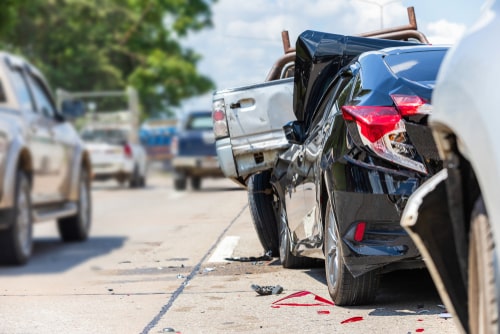
What Is A Property Damage Release Form?
What is a property damage release form the at-fault driver’s insurance company wants me to sign?
If your vehicle has been declared totaled by the insurance company after a crash, the company will want you to sign a property damage release form before giving you compensation for your totaled vehicle.
A property damage release form is a legal agreement between the injured party (the claimant) and the at-fault party’s insurance company. In personal injury claims, a property damage release form plays a critical role in resolving the property damage aspect of an accident. This legal document outlines the terms and conditions under which the at-fault party’s insurance company will compensate the victim for the damage to their vehicle or other property. Speak to an injury lawyer in Virginia Beach to learn more!
However, once you sign that form, that part of your claim is closed.
For example, let’s say the insurance company offers you a certain dollar amount for your totaled car, you accept the offer, and sign the release. Several months later you discover that the value of that totaled vehicle was $2,000.00 more than what the company paid you. Because you signed the release, you cannot go back to the company to try to renegotiate a better amount. Always watch out (if you don’t have an attorney) for the adjuster offering to include a nominal personal injury settlement along with the property damage settlement on your vehicle. Red flags go up when they offer to include the injury claim along with property damage, especially where you have made no such claim yet nor submitted all your relevant bills.
The primary purpose of a property damage release form is to provide clarity and closure regarding property damage claims. It serves several important functions:
A property damage release form typically includes the following key elements:
Insurance companies are notorious for bombarding victims with forms and releases in order to quickly settle a case for much less than it is worth. Before signing any release form, you want to make sure you have taken photos and/or videos of all the damage in order to document it for your personal injury case. Most importantly, never agree to sign any documents involving an effort to combine a totaled car’s value along with a personal injury claim (where no claim for injury was yet submitted) until you have consulted with a Virginia Beach car accident attorney with our firm to ensure you are not being taken advantage of.
What is a property damage release form the at-fault driver’s insurance company wants me to sign?
As your Virginia injury lawyer, I can help get the liability insurance carrier to tell us what’s going on in the case and figure out what your options are after a car wreck in which you were hurt. If the problem is that the insurance claim representative is dodging your calls, then my staff and I can bug them enough to push them to get on the phone with me and tell me as your representative what’s going on. Usually after a car wreck that’s not your fault, the main thing that you need from the other driver’s insurance company is to get them to deal with your vehicle’s property damage and rental car immediately. Normally, this happens in a fairly smooth process but sometimes it can be a big hassle for you to get the at-fault motorist’s insurer to call you back.
Sometimes they won’t call you back because they are supposedly trying to investigate to figure out if their driver was really at fault or even had coverage with them. Often this is the result of the other driver failing to be responsive to their insurance company as far as reporting the accident. If this is the insurance company’s game, then usually your best avenue is to ask your own insurance to temporarily pay you on your property damage to fix your car and let them get their money back from the person who ran into you when the dust settles. There can be a couple of tricky aspects of this in that you may have to pay some money for your deductible on your insurance to handle the property damage, and if you do not have rental car coverage, then you may not be able to get them to pay for it directly, but will have to do so out of your own pocket. Ultimately, even if you have to pay for the rental car yourself, we can usually get you reimbursed from the at-fault insurance company, once it’s confirmed that their client was insured with them and was at fault.
About the editors: The motto at Shapiro, Washburn & Sharplaw firm is simple -“All we do is injury law.” We hope you were able to find the answer to your injury query. If not, please review our Virginia Accident Lawyer FAQ Library for additional information. If you’d like to speak to an actual attorney about your potential injury claim for free, please contact our office at (833) 997-1774.
What are the statistics for vehicle crashes with police vehicles in the United States?
Absolutely yes. The state code spells out a long list of legal requirements regarding hitches, brakes, chains and other safety equipment for trailers ranging in size from cargo containers hauled by 18-wheelers to collapsible carts pulled by bicycles.
Drivers have legal duties to watch for and yield to pedestrians in parking lots, but a pedestrian’s right of way is only legally enforceable in crosswalks and at lot entrances.