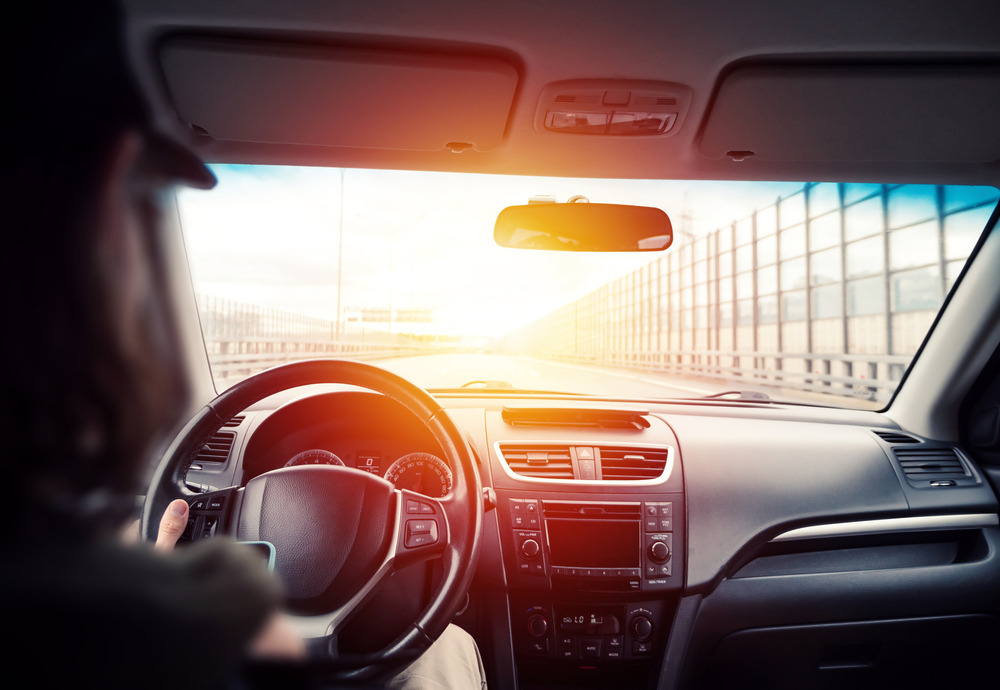
A clear fall afternoon can still bring difficult driving conditions on I-64. Low sunlight may wash across the windshield just as traffic begins slowing near the Hampton Roads Bridge-Tunnel. A Hampton car accident lawyer can investigate whether a driver’s response to glare contributed to a collision.
For commuters traveling between Hampton and Norfolk, the danger comes from poor visibility combined with changing traffic speeds. When a driver misses a line of brake lights or follows too closely, a familiar trip can end in a serious crash.
Why Can Fall Sunshine Make a Commute Harder?
Sun glare can be especially troublesome around sunrise and sunset, when the sun sits near the horizon. Those periods can overlap with commuting hours. Bright light can make it harder to see vehicles slowing down or gauge the space needed to change lanes.
A dirty windscreen can further obscure the view, and reaching for sunglasses takes your eyes off the traffic. Drivers need to prepare before they drive and adjust their driving if visibility changes. Clear weather does not guarantee a clear view of the road ahead.
The time of the crash and the vehicle’s actual direction are important when investigating glare. An interstate’s eastbound or westbound label alone doesn’t establish where the sun was in relation to a particular driver.
Why Can Glare Be Dangerous Near the Bridge-Tunnel?
The Hampton Roads Bridge-Tunnel carries I-64 between the Peninsula and South Hampton Roads. Traffic approaching or leaving the crossing can shift from steady movement to a slow queue. A driver who notices that change late may have little space left to stop.
Glare can complicate that transition by making the end of a traffic backup harder to see. Vehicles entering from ramps can also change the gap between cars. Following too closely leaves less room to respond when another driver brakes.
A driver leaving a tunnel may also encounter a much brighter view outside. The investigation should examine the conditions at the actual crash location instead of assuming the entire trip had the same visibility.
Does Staying Below the Speed Limit Protect a Driver From Fault?
The posted limit isn’t the only measure of safe speed. Virginia Code § 46.2-861 addresses driving faster than is reasonable for existing highway and traffic conditions, regardless of the posted limit. Conduct that meets that standard can be reckless driving.
Virginia Code §46.2-816 also prohibits following another vehicle more closely than is reasonable and prudent. Drivers must account for traffic and road conditions when deciding how much space to leave.
An injured person still needs evidence that the other driver’s negligence caused the crash and resulting injuries. A rear impact doesn’t automatically answer every fault question. Speed and following distance should be examined alongside what the driver could see.
Does Saying “The Sun Blinded Me” Excuse a Collision?
Glare can help explain how a crash happened, but it doesn’t automatically excuse the driver’s conduct. The question is whether the driver exercised reasonable care under the circumstances. If the driver continues to drive at an unsafe speed when visibility becomes poor, it may support a negligence claim.
Whether a sudden-emergency defense applies depends on the facts, including whether the driver contributed to creating the danger through his or her own negligence. A common traffic slowdown is not an unavoidable event simply because the driver failed to see it.
A Hampton car accident lawyer can compare the driver’s story with witness accounts and physical evidence. That review can help determine whether the crash could have been avoided with reasonable care.
What Evidence Can Show How Glare Affected the Crash?
The exact location and time can help determine the position of the sun relative to the roadway. Photographs may show shadows or visibility issues, but later images may be taken in different conditions. The condition of the windscreen can also be relevant.
Dash cam video can help determine when traffic began to slow and whether a car changed lanes before the impact. Witnesses may remember how long the vehicles ahead had been stopped. Save original recordings before routine recording cycles overwrite them.
The firm’s discussion of rear-end collisions on I-264 and the Downtown Norfolk corridor explains why these crashes can require careful investigation. Similar questions about following distance and sudden stops can arise on I-64.
What If the Insurer Says You Contributed to the Crash?
Virginia follows contributory negligence. If an injured driver’s own negligence proximately contributed to the collision, recovery can generally be barred. So much so that when the insurance company says you made an improper stop or lane change, the order of events is critical.
The defense must prove that your actions were a contributing factor to the collision. Driving in glare does not, on its own, establish that you were careless. Your lawyer can determine whether the insurance company’s version matches the available evidence.
How Can You Reduce Glare During Your Commute?
Clean the inside and outside of your windscreen before you leave. Keep sunglasses on hand and make sure your sun visor is working. Such preparations can minimize the need to search for something while traffic is moving.
Leave more space when glare restricts your vision and change speed smoothly as conditions allow. Watch traffic farther ahead so you can recognize a developing queue. Checking 511 Virginia before the trip can also help you learn about reported backups or lane closures.
What Should You Do After an I-64 Crash?
Call for emergency help when someone is injured and follow instructions from responding officers or bridge-tunnel personnel. Don’t put yourself in moving traffic to take photographs. Once safe, save the images you can and swap the necessary identifying information.
Get medical attention for your injuries and keep records of your treatment. Keep a log of the work you missed and describe how the injuries have impacted your daily activities. These records may help document the losses from the collision.
An injury claim can include medical expenses and lost wages from the collision. Other claims that could be supported are pain and suffering, or future losses. The assessment should also consider injuries that still affect your work after the vehicle repairs are completed.
Virginia generally allows two years to file a personal injury lawsuit under Code §8.01-243(A). Different rules can apply to some claims, and evidence may disappear much sooner. Starting an investigation promptly can help preserve information before vehicles are repaired or recordings are lost.
How Can Shapiro, Washburn & Sharp Help After a Glare-Related Crash?
Shapiro, Washburn & Sharp can investigate the collision and review disputes about fault or injuries. In one published case, the firm obtained a $675,000 settlement for a client rear-ended while exiting I-64 in Virginia Beach during morning rush hour. The crash made a previously symptom-free spinal condition painful and disabling, and the insurer disputed the extent of the injuries.
Your claim should be evaluated based on the evidence of your crash and losses. Speak with a Hampton car accident lawyer about your options after a collision involving fall glare or rush-hour traffic. Contact Shapiro, Washburn & Sharp on (757) 321-3983 for a free consultation.
RELATED CONTENT
- Fall Motorcycle Riding: Why Cooler Months Bring Their Own Hazards for Riders
- It’s Move-In Time: Rideshare and Traffic Surges Around ODU and Regional Colleges
- Car Accident Guide