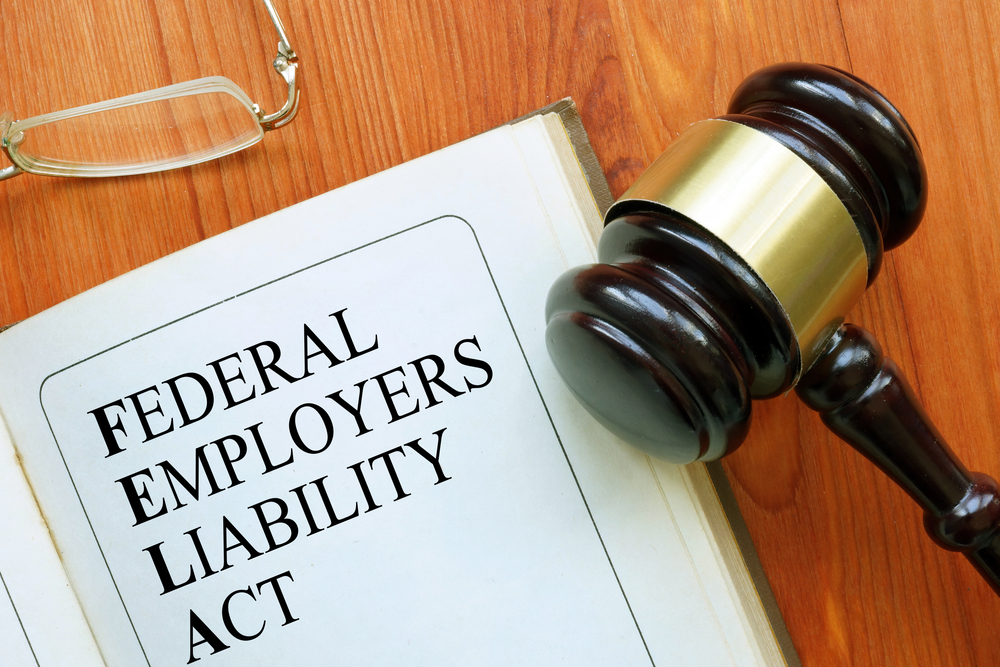
Railroad work can involve moving equipment, heavy machinery, and changing conditions around tracks and yards. When a CSX, Norfolk Southern, or Amtrak employee is hurt on the job, the claim may look like an ordinary workplace injury at first. However, the legal system that compensates for injury is very different from the workers’ compensation system used by most Virginia and other state employees. A Norfolk FELA attorney can explain how the Federal Employers’ Liability Act may apply and what the injured worker must prove.
FELA is a federal law for railroad employees who work for interstate rail carriers. Unlike standard workers’ compensation, FELA is fault-based. An injured railroad employee generally must show that negligence by the railroad played some part in causing the injury. What makes FELA so much better for railroad workers is that they can obtain a jury trial under FELA, and there is no set schedule or maximum recovery.
What Is FELA and Who Does It Cover?
The Federal Employers’ Liability Act, commonly called FELA, is found at 45 U.S.C. § 51 and the sections that follow it. It allows covered railroad employees to seek damages when an injury results, in whole or in part, from negligence by the railroad, its officers, its agents, or its employees. The law can also apply when unsafe railroad equipment or equipment contributes to an injury because of the railroad’s negligence. Violations of rail safety statutes and regulations also establish negligence if the violation contributes in any manner to the injury or death.
FELA is not an automatic payment system. The worker generally must connect the injury to some negligent act or failure by the railroad. That is one of the largest differences between FELA and workers’ compensation.
How Is FELA Different from Workers’ Compensation?
Virginia workers’ compensation can provide benefits for qualifying work injuries without requiring the employee to prove that the employer was negligent. The system may pay for approved medical care and part of the worker’s lost wages. It may also provide certain disability benefits.
Virginia law provides medical benefits for compensable injuries and wage-replacement benefits for total or partial incapacity, but maximum payments are set in various ways and may depend on the permanency and extent of the injury. But interstate railroad workers are not covered by state workers’ compensation; their remedy is under FELA. FELA works differently because the railroad’s negligence is part of the claim.
An injured employee may seek damages through a civil claim rather than the benefit structure used in ordinary workers’ compensation. Depending on the facts, compensation may include lost income, medical expenses, and pain and suffering, and the recovery is set by a jury if the case cannot be settled.
What Does a CSX, NS or Amtrak Worker Have to Prove?
A railroad employee does not have to prove that Norfolk Southern intended to cause an injury. Instead, the worker generally must show that the railroad failed to use reasonable care (was negligent) and that this failure contributed to the injury.
The U.S. Supreme Court has explained that FELA uses a more relaxed causation standard than the traditional proximate-cause rule used in many negligence cases. The question is whether the railroad’s negligence played any part, even a small one, in bringing about the injury.
Evidence can become very important. Photos of the area, witness accounts, and maintenance records may help show what happened. Training records or internal reports may also show whether the railroad knew about a dangerous condition. Careful review of any federal railroad statutes/regulations that could apply is a key part of the review as well. A Norfolk FELA attorney can work to preserve evidence before it is lost or changed.
What Happens If the Railroad Worker Was Partly at Fault?
FELA does not use Virginia’s ordinary contributory-negligence rule in the same way a standard Virginia personal injury case does. Under FELA, a worker who was partly responsible for an accident may still recover damages.
Under FELA, if a jury finds the railroad 80% responsible and the employee 20% responsible, damages would generally be reduced by 20%. Federal law specifically provides for damages to be reduced in proportion to an employee’s contributory negligence rather than barring recovery altogether, and FELA states that if an injury arises from the violation of a rail safety statute/regulation, contributory negligence is wholly extinguished.
FELA also limits the railroad’s ability to argue that the worker simply accepted the normal risks of railroad employment. The statute abolished assumption of risk as a defense when the injury resulted in whole or in part from railroad negligence. State workers compensation
What Types of Injuries Can Lead to a FELA Claim?
A FELA claim can arise from a sudden accident, a disease, or from some conditions that develop over time. A railroad worker might be injured in a fall, a switching incident, or due to an equipment defect or failure. Other claims can involve repetitive physical strain, hearing loss, or exposure to harmful substances.
The cause of the injury still needs close examination. A back injury may involve repeated heavy lifting without proper equipment. A hearing injury may involve long-term exposure to excessive workplace noise. A traumatic injury may result from unsafe track conditions or a defective tool. An occupational disease claim is covered, such as asbestos disease or any asbestos-related cancer, if it was caused by railroad employer negligence.
How Long Does a Railroad Worker Have to File a FELA Claim?
FELA generally requires a lawsuit to be filed within three years from the day the cause of action accrued, or three years from the date of death. Waiting can create serious problems even before the deadline arrives. Evidence can disappear, witnesses can become harder to locate, and memories can fade.
Some occupational injury claims raise more complicated questions about when the worker knew, or should have known, that the condition was related to railroad work. An employee with hearing loss or cancer possibly caused at the railroad, or another condition that developed gradually, should not assume that the filing period begins on the same date as it would for a sudden accident.
Why Should Injured CSX Workers Understand the Difference?
A railroad injury claim should not be treated as if it were an ordinary workers’ compensation claim. FELA requires proof of negligence, but it can also allow recovery that ordinary workers’ compensation doesn’t provide. The rules on employee fault are different as well.
In one case, we secured a jury verdict of $8.6 million against CSX Transportation for a railroad employee who developed lung cancer after occupational exposure to radiation, asbestos, and diesel fumes.
If you are a railroad employee who was injured on the job due to employer negligence, contact our nationally recognized Norfolk FELA attorneys at 757-321-3983 or complete the contact form on our website to schedule a free case review. With offices in Norfolk, Virginia Beach, Portsmouth, and Hampton, our personal injury law firm represents injured railroad workers and families of deceased railroad workers throughout the eastern United States.
RELATED CONTENT
- How Do Railroad Safety Statutes Impact Railroad Injury Cases?
- Do I Need to File an Accident Report for a FELA Claim?
- What Railroad Claim Agents Won’t Tell You Guide