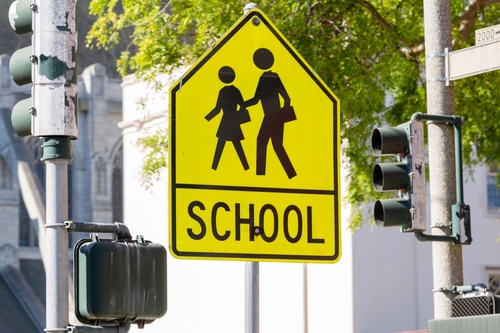
A school zone crash can change a child’s life in seconds. These areas are designed to protect some of the most vulnerable people on the road because children are shorter, less visible to drivers, and often less predictable when walking near traffic. School arrival and dismissal times create periods when many young pedestrians are present, which means a careless driver can cause devastating injuries.
When a crash happens in a school zone, families often focus on whether the driver will face criminal charges or traffic penalties. However, two separate paths may follow. The state can pursue a traffic or criminal case against the driver. The injured child and family may also have a civil claim seeking compensation for the harm caused by the crash.
A reckless driving charge, an enhanced speeding penalty, or another traffic violation does not provide compensation for an injured child. A civil injury claim serves a different purpose. A Virginia Beach car accident lawyer can help families understand how the facts of the crash may support a claim for damages.
How Are School Zone Crashes Different to Other Accidents?
Drivers have a legal duty to operate their vehicles with reasonable care. That duty becomes especially important in places where children are likely to be present. A driver who speeds through a marked school zone, ignores a crossing guard, passes a stopped school bus, or drives while distracted near a crosswalk may violate that duty.
Virginia’s traffic laws are intended to reduce these dangers. When a driver violates a safety law and causes an injury, that violation may become important evidence in a civil claim. In some situations, breaking a safety statute can support a finding of negligence per se, meaning the violation itself can help establish that the driver failed to act with proper care.
The fact that a driver receives a citation or criminal charge does not automatically result in payment for the child’s injuries. The civil claim still requires proof of the crash, the driver’s conduct, and the losses caused by the injuries.
What Happens in the Criminal or Traffic Case After a School Zone Crash?
After an accident in a school zone, law enforcement may investigate whether the driver committed an offense. Depending on the circumstances, the driver could face charges for speeding, reckless driving or other infractions. Additional penalties may also apply in areas where children are present if certain traffic offenses are committed.
The government, not the injured family, brings the criminal or traffic case. Law enforcement may issue traffic charges, while prosecutors handle criminal prosecutions. But the injured child and family are not parties to that case, and they do not get any compensation just because the driver gets convicted.
But the traffic case evidence can help with a civil injury claim. A guilty or nolo contendere plea, a finding of guilt in absentia, or proof of a serious traffic violation may help establish negligence, although causation still must be proved. A knowledgeable Virginia personal injury lawyer can go over the available records and tell you how they might affect a claim.
Who Else May Be Responsible for a School Zone Injury?
The driver who caused the crash is usually the main liable party, but other sources of liability may need to be examined. The facts of each crash will determine whether another party may bear some responsibility.
If the driver was on the job at the time of the crash, for example, an employer may have exposure. More questions may arise if the business allows an unsafe driver to operate a vehicle as part of their job duties. In other cases, poor signage, unsafe road conditions, or problems involving the design of a crossing area may need further investigation.
You can’t tell who is to blame just by looking at the traffic ticket or police report. A full review of the circumstances can help identify all possible causes of the injury.
What Compensation Can an Injured Child Recover After a School Zone Crash?
A child injured in a school zone crash may face immediate medical needs along with challenges that continue for years. A civil claim can seek compensation for medical treatment, future care, and long-term effects of physical or psychological injury.
Child injuries can impact development, education and everyday activities. A serious crash can lead to the need for long-term medical care or support that goes far beyond initial healing. Families may need to consider not only current expenses but also how the injury may impact the child in the future.
Virginia law also recognizes that claims involving minors have different timing rules than claims involving adults. The statute of limitations for a child’s personal injury claim is generally affected by tolling provisions, which can delay the running of the standard filing period. Parents should not assume that the usual deadline applies in the same way it would for an adult injury claim.
How Does Virginia’s Contributory Negligence Rule Affect Child Injury Claims?
Virginia follows a contributory negligence system. This means that an injured person who is partially responsible for the injury may be denied recovery for damages. But the application of this rule may be different if the injured person is a child.
In deciding whether a child can be contributorily negligent, the age of the child and his understanding of a danger are important factors. Younger children are usually held to a different standard than adults because they may not be equally capable of recognizing risk or making careful decisions. A child under seven cannot be contributorily negligent in Virginia. A child who is at least seven but younger than fourteen is presumed incapable of negligence, although that presumption can be rebutted.
Because these issues can be complicated, parents should be careful about making assumptions about fault after a school zone crash. The driver’s actions, the child’s age, and the specific facts of the incident all need to be considered.
When Should Parents Contact a Lawyer After a School Zone Crash?
After a crash, parents should focus first on the child’s health and safety. Even if a child appears fine, some injuries might not be immediately visible. Medical assessment can help identify injuries and document the child’s condition.
A traffic charge can hold a driver accountable for breaking Virginia law, but it does not pay an injured child’s medical bills or compensate the family for the effects of a serious injury. Parents may need to pursue a separate civil claim even when police have already cited or charged the driver.
Shapiro, Washburn & Sharp has handled serious crashes involving young people and school vehicles. In one case, a high school junior and varsity baseball pitcher was injured when a public school bus failed to yield at an intersection and struck his pickup truck. He suffered a concussion, head injuries, and damage to his throwing shoulder that kept him from pitching for months. The bus driver pleaded not guilty to failing to yield, but the firm obtained onboard bus video showing that she did not slow as she approached the yield sign. The city ultimately agreed to a $50,000 settlement for the student’s civil injury claim.
If your child was injured by a speeding, distracted, or otherwise careless driver near a school, a Virginia Beach car accident lawyer at Shapiro, Washburn & Sharp can investigate what happened and explain your options for seeking compensation. Call 757-321-3983 or fill out our online contact form to schedule a free consultation.
RELATED CONTENT
- The Importance of Police Reports in a Virginia Car Accident
- Common Types of Virginia Bus Accidents
- Child Injury Guide