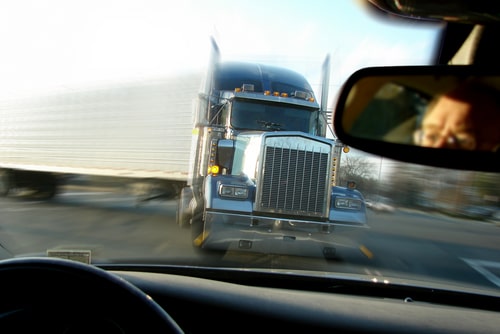
The National Safety Council (NSC) reports that in 2023, 5,375 large trucks were involved in fatal crashes, an 8.2 percent increase from 2022. About 114,552 large trucks were involved in crashes that resulted in injuries that year.
A collision with a large commercial truck often results in catastrophic injuries, overwhelming medical expenses, and sometimes, long-term disruption to your life. What many accident victims don’t realize is that federal laws and regulations govern how truck drivers must operate and how truck companies must maintain their fleets. These rules were put in place to protect everyone on the road, and a violation of them can help you pursue just compensation.
At Shapiro, Washburn & Sharp, our attorneys have decades of experience holding truck drivers and the companies they work for accountable when they cause harm. Our firm has been recognized as a Tier 1 Best Law Firm®, and multiple lawyers in our firm have been recognized in the Best Lawyers in America publication for their exceptional work. This depth of experience and recognition helps us to fight for our clients’ rights in truck accident claims.
Read more below about how federal regulations may affect your truck driving claim, and if you need help, contact our experienced Virginia Beach truck accident attorneys at 833-997-1774 for a free consultation.
What Are the Federal Regulations for Large Truck Drivers?
Truck drivers are held to stricter regulations than everyday car drivers because of the larger size of the vehicles they operate and the danger they pose to other vehicles. A passenger car typically weighs around 3,000 pounds, while a fully loaded tractor-trailer can weigh up to 80,000 pounds. That means the stopping distance, blind spots, and maneuverability of these vehicles are dramatically different from those of everyday passenger cars, SUVs, and pickup trucks.
To address this danger, Congress passed laws like the Motor Carrier Safety Act and established agencies like the Federal Motor Carrier Safety Administration (FMCSA) to oversee trucking safety on the roads. The FMCSA sets and enforces regulations that commercial drivers and trucking companies have to follow. These rules go well beyond the standard “rules of the road” that apply to everyday motorists and cover areas like working hours, rest breaks, vehicle inspections, and driver qualifications.
These regulations were put into place to help reduce the risk of accidents.
What Key Federal Regulations Affect a Large Truck Accident?
When a large truck is involved in an accident that harms other drivers and passengers, an experienced truck driving attorney will investigate to see if the driver, the company they were working for, or a third party may have violated any of the following federal regulations.
Hours of Service Regulations
One of the most important sets of rules involves hours of service (HOS), which simply means how long a driver is allowed to operate the vehicle before they must stop and take a break. Fatigue is a leading cause of truck accidents because tired drivers have slower reaction times, impaired judgment, and sometimes even microsleep episodes, where they fall asleep for short periods.
Current FMCSA regulations require that property-carrying drivers limit their driving hours to 11 hours after 10 consecutive hours off duty, restrict their on-duty time to 14 hours after coming on duty, and take a mandatory 30-minute break after 8 hours of driving. They can’t go over 60 hours of duty over seven consecutive days or 70 hours over eight consecutive days.
Electronic logging devices (ELDs) now monitor whether drivers are complying with these rules, making it harder for drivers and the companies they work for to falsify records.
Bad Weather Driving Restrictions
Federal rules require drivers to reduce speed or even stop driving in hazardous conditions involving snow, ice, or heavy rain. Larger trucks are harder to control in poor weather, so this regulation is critical to protecting motorists.
Vehicle Maintenance
Trucking companies are required to regularly inspect, repair, and maintain their fleets. Drivers also have to perform pre-trip and post-trip inspections to make sure the truck is safe before heading out on the road. Failing brakes or worn tires can be deadly on the road, which is why these regulations are so important.
Driver Training and Qualification
Commercial drivers have to meet higher training standards than regular motorists. They have to maintain a Commercial Driver’s License (CDL) and go through specialized training. They also have to pass regular medical examinations to make sure they don’t have any health conditions that could interfere with their ability to safely operate the truck. They must maintain clean driving records. Certain violations can disqualify them from holding a CDL.
How Do Federal Regulations Come Into Play in Truck Accident Claims?
When someone is hurt in a large truck accident, an experienced truck accident attorney will investigate to see whether any federal laws or regulations were violated. If a driver’s electronic logging device shows hours of service violations, for example, or if inspection records show that the trucking company failed to address known mechanical issues, that could establish what is called “negligence per se,” and the only remaining proof needed to prove liability is that the violation was a proximate cause of your injuries.
This means that a truck driving attorney can use regulatory violations to establish negligence in many jurisdictions, significantly strengthening a victim’s accident claim.
How a Truck Accident Lawyer Can Help
Because large truck accidents are so different from regular car accidents, it’s critical to have an experienced truck accident attorney on your side. They will help identify all possible negligent parties, including the driver, the trucking company that employed them, maintenance contractors who failed to properly service the vehicle, cargo loading companies who may have improperly loaded the cargo, and truck manufacturers whose defective components may have contributed to the crash.
If you or a loved one was injured in a truck accident, contact us right away. We will investigate your case thoroughly, as we did for our client who sustained a traumatic brain injury (TBI) in a large truck accident. We helped negotiate a $883,155 insurance settlement.
We have various offices to serve you, including those in Virginia Beach, Norfolk, Portsmouth, Suffolk, Hampton, Chesapeake, and Kitty Hawk, North Carolina.
RELATED CONTENT
- Federal Trucking Regulations to Help Prevent Truck Accidents
- Best Guide to Truck Accident Injuries
- Common Causes of Virginia Truck Accidents