Brain Injury Lawyer Virginia Beach
If you suffer a head injury, you will likely go to the doctor and get an MRI or CT scan. But what if that scan comes back normal? You’re still experiencing symptoms like dizziness, headaches, and confusion. Are you just imagining a problem that doesn’t exist?
This frustrating scenario is more common than you might think and highlights a significant issue in how we typically diagnose traumatic brain injuries (TBIs).
The truth is that these types of injuries are often misdiagnosed. One study found that over 58 percent of TBIs were missed when patients presented with other injuries, especially spinal cord injuries. The medical imaging used to examine these patients’ brains revealed no signs of TBI despite presenting with clear symptoms such as confusion or slowed thinking.
Other research has shown that most so-called mild TBIs, which are typically labeled as minor concussions, don’t show up on a CT or MRI scan. In young athletes, in particular, according to one study, conventional neuroimaging scans are typically normal.
Even the Centers for Disease Control and Prevention (CDC) recommends the following: “Even if the injury doesn’t show up on these tests, you may still have a mild TBI or concussion.”
At Shapiro, Washburn, & Sharp, we have extensive experience handling injury claims for clients who have suffered from TBIs. We understand that just because an MRI appears normal, it doesn’t mean a brain injury hasn’t occurred. Call our Virginia Beach brain injury lawyers today at 833-997-1774 for a free consultation. We may be able to help.
Why Does Brain Imaging Miss TBIs?
Imaging technology—such as that used in MRIs and CT scans—has become incredibly advanced over the last few years. However, it still has some significant limitations when it comes to detecting certain types of traumatic brain injuries (TBIs).
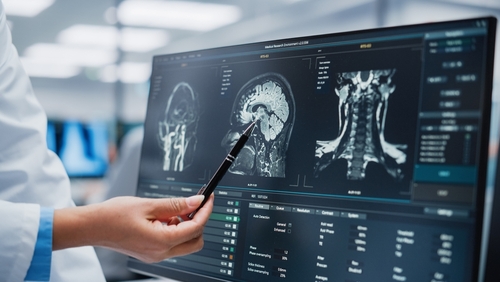
An MRI, for example, is like taking a picture of your brain. It may show major bleeding, large areas of damage, or obvious structural problems, but it can’t capture microscopic changes that happen at the cellular level. It also can’t “see” tiny tears in the brain’s white matter (called diffuse axonal injury), which often signal a mild TBI or concussion.
What makes concussions particularly tricky is that they usually involve changes in how brain cells function rather than visible structural damage. When your brain is jarred during an impact, it can mess up the normal chemical processes that brain cells use to communicate with each other.
Think of it like a power surge in your home’s electrical system. The surge might not be apparent when you look at your outlets, switches, or wires. They would all appear to be fine. But you may notice that some of your devices, like your television or computer, no longer work as well as they did. That’s because the internal circuits were affected by the surge—a change that you could not see.
In the same way, a concussion or other TBI can affect the brain’s ability to do its job without showing up as physical damage detectable in an image.
An Example of a TBI Misdiagnosis
Let’s take a look at how this sort of scenario may play out in real life. Imagine that Emma, a 29-year-old middle school teacher, slipped on a wet floor in the school and hit her head. She felt dazed and dizzy, so she went to the emergency room. The medical team ordered a CT scan, followed by an MRI the next day. Both came back normal, so the doctors told Emma she would probably be fine.
Unfortunately, Emma wasn’t fine. Over the next few weeks, she suffered from constant headaches, struggled to remember the names of her students, and couldn’t focus in class. She knew something was wrong, but when she asked her medical team about it, they referred to her “normal” scans to dismiss her concerns.
Eventually, Emma saw a specialist who diagnosed her with a mild traumatic injury based on her cognitive testing results—not her scan.
Often, with a TBI, it’s the symptoms of the injury that are the most important when it comes to making a diagnosis. These may include persistent headaches, dizziness, nausea, difficulty concentrating, memory problems, sensitivity to light and sound, mood changes, and sleep disturbances. These symptoms usually show up because the injury disrupted the brain’s normal functioning.
What is the Impact of a Normal Scan on Legal Claims?
Whenever you’re hurt because of someone else’s negligence, having a proper diagnosis is crucial for pursuing compensation. You need that proof of the injury and its effects on your daily life. This is why having a “normal” scan can create a challenging situation for injury victims. Insurance companies and any opposing attorneys will likely use the absence of visible damage on imaging as a reason to deny claims or minimize settlements. They may argue that since the scan was normal, there was no real injury.
The legal team at Shapiro, Washburn, & Sharp understands how this works. We know that victims, despite having a normal scan, are dealing with real symptoms that are affecting their ability to work, maintain relationships, and enjoy life, and that they deserve to be compensated for the wrong that was done to them.
We have the expertise needed to help you gather the evidence to prove your case. We may recommend neuropsychological testing to document cognitive changes and help secure testimony from medical experts who can explain why your symptoms exist, even if they are not visible on a CT scan or MRI. We will also guide you in documenting your symptoms and how they show up in your day-to-day activities. Testimony from family and friends regarding the changes they’ve observed in your behavior may also be helpful.
How Can a Brain Injury Lawyer Help?
If you or a loved one suffered from a traumatic brain injury due to someone else’s negligence, contact us at Shapiro, Washburn, & Sharp today. We have the knowledge and experience to help you manage a challenging case, even when the imaging doesn’t tell the whole story. We also know that just because the technology can’t see your injury doesn’t mean it isn’t there.
We have a track record of fighting for brain injury victims and winning, as we did for a railroad injury victim who suffered a TBI. We helped negotiate a $1 million settlement on his behalf during mediation.
You can find our offices throughout Virginia Beach, Portsmouth, Norfolk, Suffolk, Hampton, and Chesapeake.