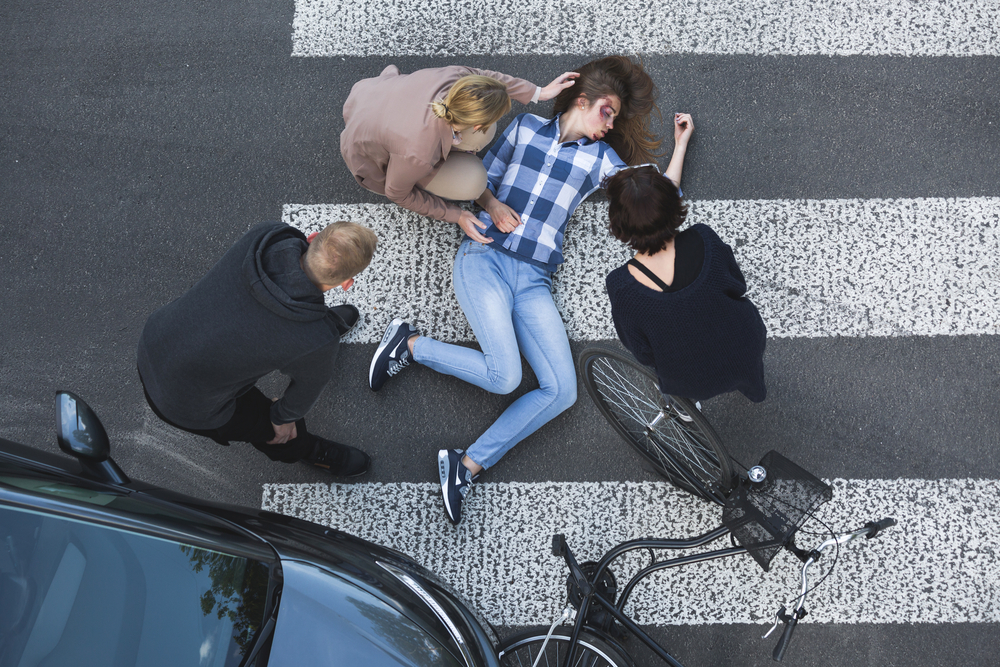
Pedestrian accidents are dangerous at any hour. But the risk increases significantly after dark. Reduced visibility, impaired drivers, and inadequate lighting create conditions where a simple walk can turn into a life-altering event.
For victims who have been struck by a vehicle at night, understanding what caused the accident and who bears legal responsibility is the first step toward getting the compensation they deserve.
If you or a loved one has been injured, call Shapiro, Washburn & Sharp today to speak with a Virginia Beach pedestrian accident lawyer and find out how our firm can get you the financial compensation you may be entitled to.
Why Nighttime Pedestrian Accidents Are So Common
The physics of nighttime driving creates a fundamentally different environment than daytime conditions. Even with functioning headlights, a driver’s effective field of vision narrows considerably after dark. Pedestrians wearing dark clothing can be nearly invisible until they are already in the vehicle’s path.
A number of factors consistently contribute to nighttime pedestrian accidents:
- Inadequate or missing streetlighting on roadways and crosswalks
- Driver impairment from alcohol or drugs, which is statistically more common at night
- Speeding, which reduces reaction time and increases the severity of impact
- Distracted driving, including phone use and in-vehicle distractions
- Failure to use headlights properly or use high beams in populated areas
- Pedestrian actions, such as crossing mid-block or walking along roadways without sidewalks
No single factor operates in isolation. In most nighttime pedestrian collisions, more than one of these items is present.
According to the National Highway Traffic Safety Administration, the majority of pedestrian fatalities occur in darkness, and most happen outside of intersections, underscoring how much of the risk falls outside traditional crosswalk areas.
Virginia’s Headlight Requirements and What They Mean for Liability
Virginia law requires drivers to use headlights from sunset to sunrise and whenever visibility is reduced to less than 500 feet. This isn’t optional, and failing to comply is a traffic violation that can directly support a negligence claim if a pedestrian is injured.
Drivers are also expected to operate at speeds that allow them to stop within the range of their own headlights. This principle, sometimes called the “assured clear distance” standard, means a driver cannot claim they didn’t see a pedestrian in time if they were traveling at a speed that made stopping impossible, given their visibility conditions.
When a driver’s headlight failure, improper use of lights, or excessive speed under low-visibility conditions leads to a pedestrian injury, that behavior is directly relevant to proving fault.
A Virginia Beach pedestrian accident lawyer can examine the specific conditions present at the time of the accident and identify which violations of traffic law or standards of care contributed to the collision.
Municipal Liability and Lighting Failures
Driver behavior is not always the only source of liability in nighttime pedestrian accidents. When inadequate street lighting on a public road or at a crosswalk contributes to an accident, the municipality responsible for maintaining the infrastructure may share liability.
These claims are more complicated than standard driver negligence cases. Virginia has specific rules governing how and when you can sue a government entity, including shorter notice requirements and caps on damages. Identifying whether a lighting failure played a role and acting quickly to preserve that evidence matters in these situations.
How Virginia’s Contributory Negligence Rule Affects Nighttime Cases
Virginia follows a contributory negligence standard, which is stricter than that of most other states. Under this rule, if a pedestrian is found even partially at fault for the accident, they may be barred from recovering any compensation.
Insurance companies frequently raise contributory negligence arguments in nighttime pedestrian cases. They may argue that the pedestrian was wearing dark clothing, crossed outside a crosswalk, or was otherwise adding to their own visibility problem. These arguments need to be addressed head-on with evidence, witness accounts, and, where applicable, testimony about road and lighting conditions.
This is one reason why building a strong factual record from the start is so important in nighttime pedestrian accident cases.
What to Do After a Nighttime Pedestrian Accident
If you or someone you know has hit by a vehicle after dark, certain steps can help preserve your legal options.
Seek medical attention immediately, even if injuries don’t seem severe at first. Internal injuries and traumatic brain injuries can present with delayed symptoms, and a medical record establishing the connection between the accident and your injuries is foundational to any claim.
If possible, document the scene. Photos of the lighting conditions, the location of the accident relative to crosswalks and streetlights, and any visible skid marks or vehicle damage all become valuable evidence.
Report the accident to law enforcement. A police report creates an official record and may capture information about the driver’s condition, speed, and headlight use at the time of the collision.
Do not give recorded statements to insurance adjusters before speaking with an attorney. Adjusters are trained to ask questions in ways that can be used to reduce or deny your claim, and nighttime pedestrian cases involving contributory negligence arguments are particularly vulnerable to this.
Injuries in These Cases Are Often Severe
Pedestrians have no protection against the force of a vehicle impact. Nighttime collisions tend to be especially serious because drivers often don’t brake at all before impact. Traumatic brain injuries, spinal cord damage, multiple fractures, and internal injuries are common outcomes. The severity of these injuries makes the quality of the legal representation pursuing the claim genuinely consequential.
Getting the Help You Need After a Serious Accident
Nighttime pedestrian accidents involve layers of liability that require thorough investigation, from driver behavior and headlight compliance to road conditions and municipal responsibility. A Virginia Beach pedestrian accident attorney at Shapiro, Washburn & Sharp has the experience and resources to build the kind of case these situations demand. Our firm has recovered significant compensation for seriously injured pedestrians, including a $100,000 settlement for a teen who was struck by a speeding vehicle.
Contact us at 833-997-1774 for a free consultation. We serve clients from offices in Virginia Beach, Portsmouth, Suffolk, Hampton, Norfolk, and Chesapeake.