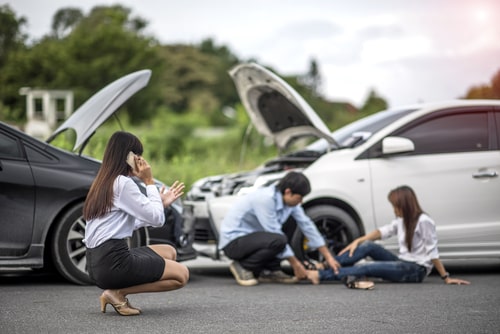
One minute you’re driving along, minding your own business, and the next, a crash turns your whole world upside down.
Most of us know that after a car accident, the first thing we need to do is make sure everyone is okay and get immediate medical assistance if needed. We also understand that we need to call the police and notify the insurance company as soon as possible.
But there’s something else just as important that we can often forget in the chaos of the moment—taking photos of the scene.
At Shapiro, Washburn & Sharp, we’ve helped many clients handle the aftermath of serious car accidents, and we’ve seen time and again how valuable photos can be in proving what really happened. Many times, because photos can tell the story, they can make or break a case.
In the post below, we explain why photos are so important and how to make sure your photos provide important evidence, even if you’re too shaken up to take them yourself. Meanwhile, if you or a loved one has been involved in a serious car accident, please call our Virginia Beach car accident lawyers today at 833-997-1774 for a complimentary consultation.
Why Are Photos So Important After a Car Accident?
Usually, when you’re in an accident, you have your version of what happened, and the other driver has theirs. You may believe the accident was the other driver’s fault, but the other driver—even if they know better—may try to wriggle out of responsibility by saying it was actually your fault.
Without solid proof, it can become a matter of one person’s word against another’s. In a legal case, this can leave you with uncertainty about the outcome. That’s where photos come in. They provide objective, visual evidence that can support your side of the story. Insurance companies often rely heavily on this type of evidence because it’s so powerful.
A single photograph can sometimes establish fault. It can show how severe the accident was, reveal important details about the road conditions, and support your version of events more powerfully than any verbal testimony. A well-timed photo can capture skid marks showing where the vehicles were before impact, or even show which direction the vehicles were facing.
At Shapiro, Washburn, & Sharp, we’ve used accident scene photos to help show that a client wasn’t at fault themself, even when the other driver tried to shift the blame. These images can be critical if you’re trying to gain compensation from the insurance company or even from a judge if your case goes to court.
How Do I Take Effective Photos After a Car Accident?
You don’t have to be a professional photographer to take helpful pictures after a crash, but it does help if you understand a few key strategies that may help your case.
All you need is the camera on your cell phone and to ask yourself what you need to show to help someone else piece the accident together in their own mind. You want to capture the story from every perspective.
Start by stepping back and taking wide shots of the entire scene. You want to show the layout of the intersection or road, the position of the vehicles, and any surrounding hazards or landmarks. These may include nearby houses or buildings, mailboxes, utility poles, and thick brush (which may have been blocking a road sign), among others.
Next, zoom in on the details. Take pictures of any dents, broken glass, deployed airbags, and anything else on your vehicle and the other vehicle(s) involved to help show the force of the impact. Try to take these photos from multiple angles—front, back, and side. This helps give a more complete picture of the crash. Move around the scene from one point to the next, shooting picture after picture. Anything could be relevant, so don’t hesitate to take that picture.
What Should I Take Pictures Of?
You already know that it’s a good idea to take pictures of the damage to the vehicles. But what else do you need to shoot?
The Accident Scene
As mentioned above, you want to set the scene in your photographs, including the accident itself and the surrounding environment. If any mailboxes, street signs, utility poles, or parked vehicles were damaged, take shots of those as well.
Vehicle Damage
No detail is too small, so shoot every scratch, dent, and area of damage on all vehicles involved. You’ll also want to photograph those areas that aren’t damaged, as that can help establish what didn’t happen. Include shots of license plates, vehicle identification numbers, and any deployed airbags.
Road Evidence
Take pictures of any evidence of the crash on the road, including broken glass, scattered debris, skid marks or gouge marks in the pavement, and any fluid leaks from the vehicles. Accident reconstruction experts often use these to determine speed, braking patterns, and point of impact.
Inside the Vehicles
If it’s possible and safe to do so, take pictures inside the vehicles involved. You’re looking for evidence of potential distraction, such as cell phones, food containers, or beverages.
Road Hazards and Conditions
Potholes, debris, construction zones, or other road hazards can contribute to accidents. Take photos of these and any brush or trees that may have been in the way.
Weather and Visibility Conditions
If weather may have played a role in the accident, take shots of wet pavement, accumulated snow, or anything else that demonstrates what the drivers were facing at the time.
What If I Can’t Take Pictures Myself?
If you’re too severely injured after a crash to take photos yourself, you may still be able to get this important evidence. Maybe a passenger in the car is well enough to take the pictures, or possibly a friend or family member who arrives on the scene. Even a witness may be willing to do so. Police officers may take some photos, too, but you should not assume that they will.
In some cases, nearby business cameras or traffic cameras may capture footage of the accident. Your car accident attorney can request this footage later on. Just be sure you contact your attorney as soon as possible so they have the opportunity to do that. The footage will likely be overwritten or deleted if not requested quickly.
Meanwhile, don’t forget to ask for contact information from the witnesses if you can. Anyone who saw what happened may be able to provide crucial testimony to support your case. Ask for their names, phone numbers, and a brief statement about what they observed. If they’re willing, ask them to take a photo with their contact information written on a piece of paper. That creates a visual record that’s harder to lose or forget later on.
How a Car Accident Attorney Can Help
At Shapiro, Washburn & Sharp, we’ve seen how important good photo evidence can be in getting accident victims the compensation they deserve. We’ve used this and other evidence we’ve gathered to help our clients put together a strong case. When a disabled veteran came to us after being hit by a negligent driver who ran a red light, we helped negotiate a $520,000 insurance settlement on her behalf.
Contact us for a free consultation. We can be reached in Virginia Beach, Portsmouth, Norfolk, Suffolk, Hampton, Chesapeake, and Kitty Hawk, North Carolina.